
Applying to SAGE
Key SAGE Dates
SAGE Attendees
Professionals
SAGE welcomes applications from professionals seeking development opportunities. Examples include:
Industry professionals
College and university faculty
Postdoctoral fellows
And more
Students
SAGE accepts applications from undergraduate and graduate students from all over the world. SAGE applicants typically major in geophysics, geology, physics, math, engineering, or a related field.
Successful applicants will have:
A strong background in math and physics (see required coursework below)
Completed at least their sophomore year of undergraduate studies prior to the start of the program
Course credit may be available—and must be arranged prior to arrival at SAGE and is subject to approval of your home institution and advisor.
How to Apply to SAGE
-
The following coursework is required to be considered for SAGE:
Minimum of one year—two semesters or three quarters—of college physics
Minimum of three semesters of calculus; four semesters preferred. Coursework should include multivariable calculus
Structural geology and introductory geophysics is recommended but not required
Note: Required coursework must be completed prior to attending SAGE, but does not have to be completed prior to submitting an application. Applicants currently enrolled in the above coursework will be considered to have met the coursework requirement.
-
Please fill out the online Application Form to the best of your ability, which is available the start of the application period.
Submit a letter—limit one page, single-spaced—describing:
How your educational background, courses, and experience have prepared you for participation in SAGE
Your career goals and your interest in SAGE as it relates to your academic and/or career development
Please provide transcripts for all colleges or universities that you have attended (unofficial copies are acceptable). For your identity protection, please mark through/black-out any Personal Identifying Information (PII) such as address, SSN, etc.
We request that you include your first and last name in all submitted application documents (eg, JohnSmithLetterOfInterest.pdf)
-
Please supply two references from an academic advisor, research advisor, academic mentor, professor of relevant coursework, or supervisor.
A reference consists of a completed reference form and may include a letter of recommendation (which is encouraged but not required).
Reference forms will be available at the start of the application period.
Follow our 3-Step Application Process
SAGE Program Timing
SAGE attendees must be available to complete all virtual and in-person touch points throughout the hybrid program.
Mid-May to mid-June: Before SAGE field camp begins, students will participate in 3 to 4 weeks of part-time virtual activities—including introductory meetings and material discussions
Mid-June to early July: In-person SAGE field camp in Los Alamos, NM—including lectures, group projects, and final presentations
Mid-July to early August: After the in-person camp ends, volunteer students will continue research activities
A full course schedule and details will be provided with acceptance letters
Sample SAGE Syllabus
This is a high-level overview of topics covered at SAGE. Note that topics and timing will adjust accordingly for each SAGE program.
-
Week 1
Gravity
Structural Geology
Volcanic Processes
Week 2
Earth Interior/Plate Tectonics
Magnetics
Sedimentary Processes
Week 3
Hydrology
Reflection/ Refraction
Seismicity
Wave Types - Seismic Properties
Week 4
Fourier Analysis and Filtering
Maxwell’s Equations
Resistitivity as a property
-
Field safety
Rock properties
Geophysical methods
Instrumentation
Local geology and field trip
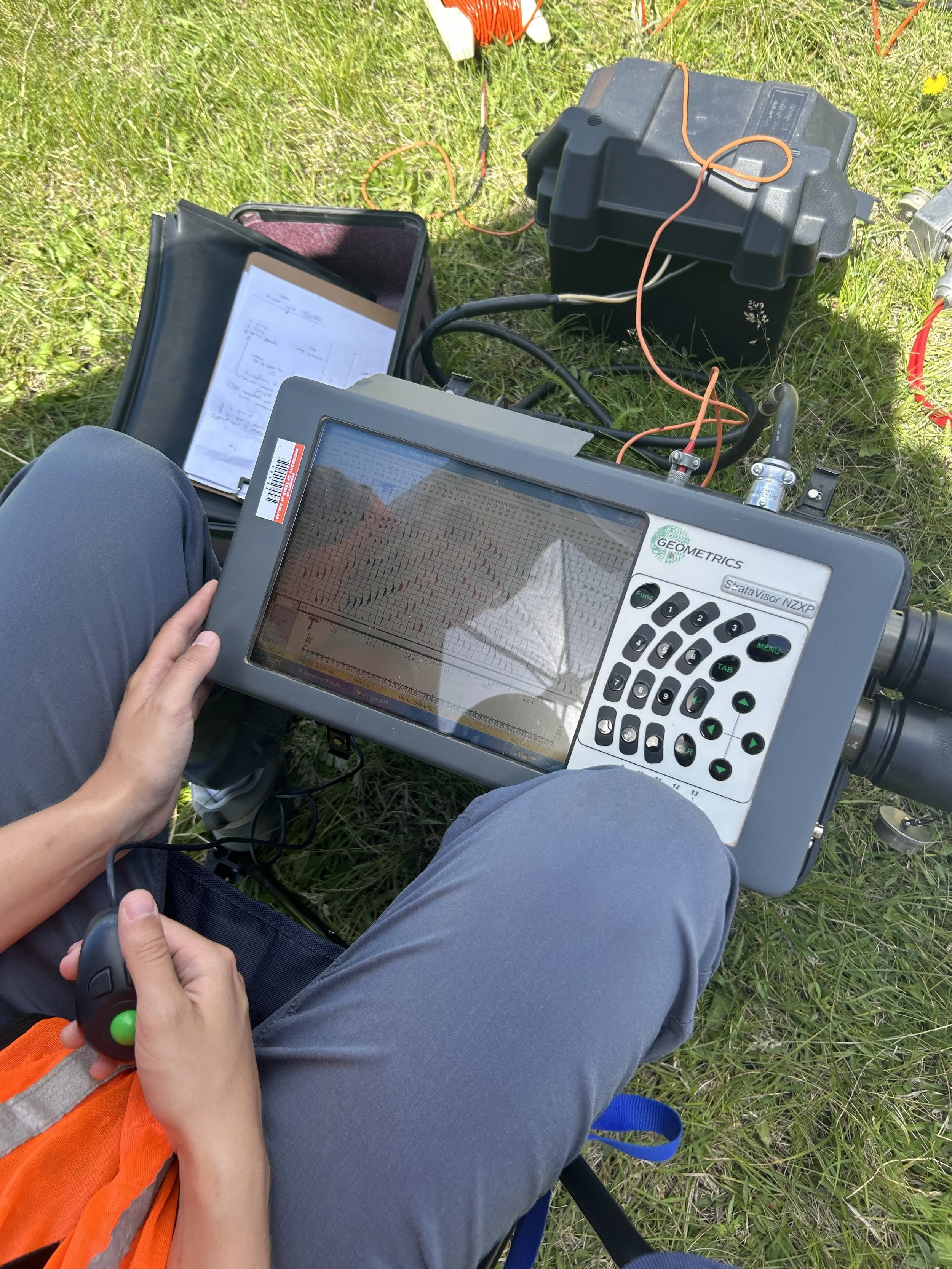
Field work - use and deployment of geophysical methods
Data processing and interpretation
Final presentations
-
Volunteer students may elect to extend their SAGE research project.
SAGE Course Fees
Following acceptance into SAGE, participants will pay a $1,000 USD registration fee. This fee is used to help pay for food, materials, and accommodations throughout your time at SAGE. A limited number of grants are available.
Field Camp Location
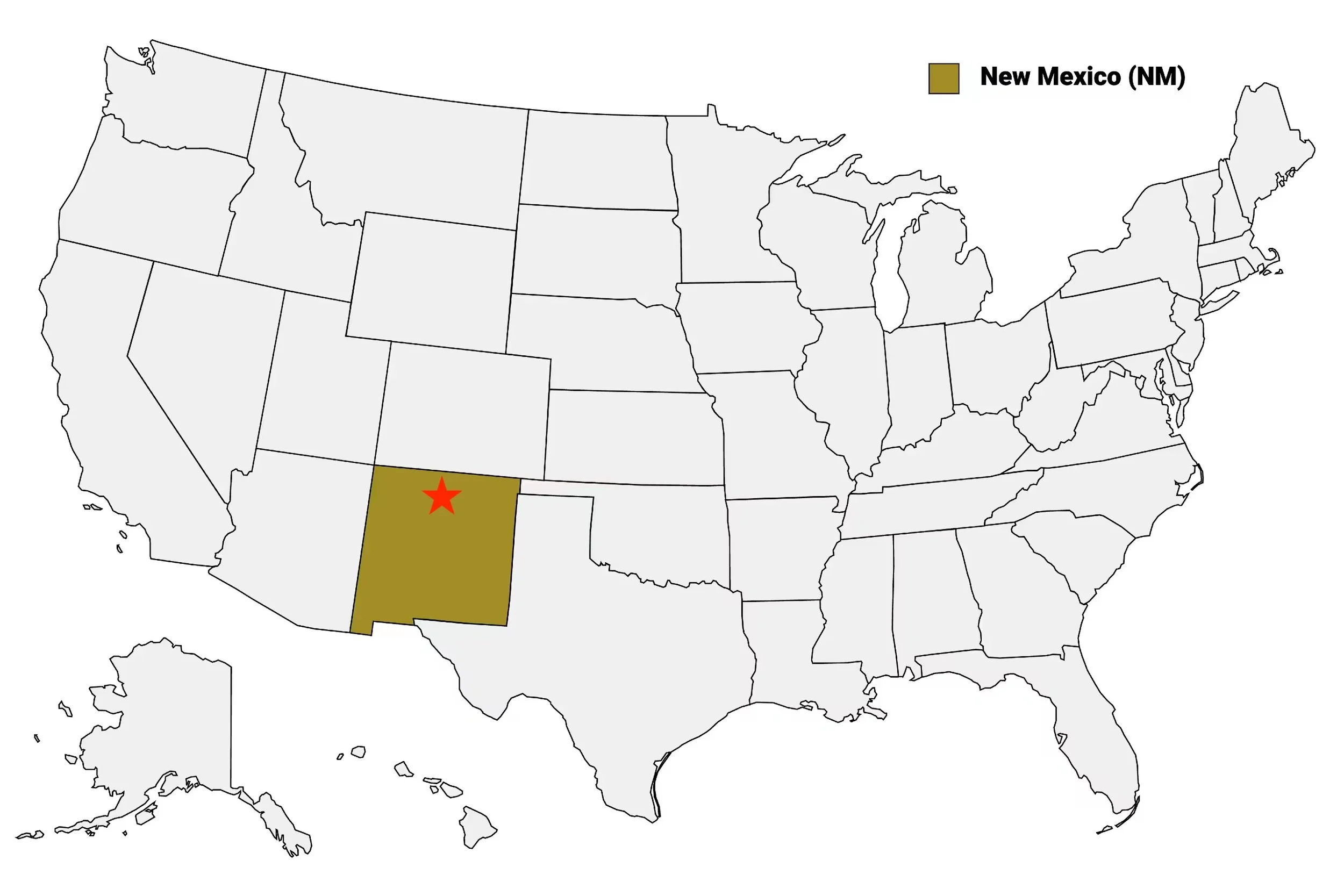
Northern New Mexico
USA
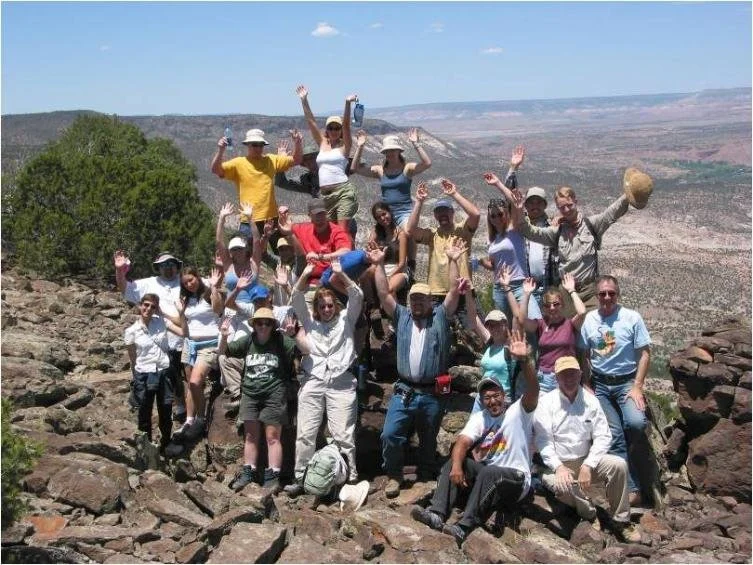
SAGE participants will spend approximately 2.5 weeks at a campground in the Jemez Mountains near Los Alamos, New Mexico, USA—participating in fieldwork, group activities, and lectures.
Travel to SAGE
All participants are asked to make their own travel arrangements to New Mexico in mid-June. The closest major airport is Albuquerque, NM (ABQ). Detailed logistics will follow with SAGE acceptance letters.